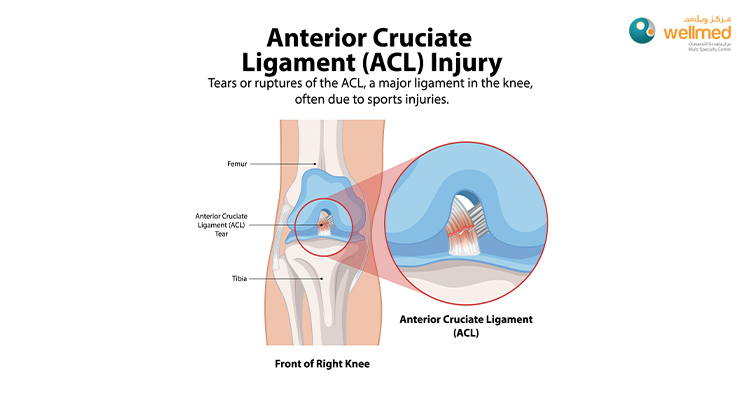
The Anterior Cruciate Ligament (ACL) is one of the most important ligaments in the knee joint. It connects the thigh bone (femur) to the shin bone (tibia) and helps stabilize the knee during movement. ACL tears are among the most common orthopedic injuries, especially among athletes and individuals involved in physically demanding activities.
At the Wellmed Wellness Multispeciality Center, orthopedic specialists frequently diagnose and treat ACL injuries using modern medical techniques and rehabilitation programs. Early diagnosis and proper treatment are essential to restore knee stability and prevent long-term complications.
What Is an ACL Injury?
An ACL injury occurs when the ligament is stretched, partially torn, or completely torn. The ACL helps control forward movement and rotation of the knee, which is why damage to this ligament can cause instability and difficulty in walking or performing physical activities.
ACL injuries often happen during sports such as football, basketball, skiing, or cricket, where sudden stops, jumps, or direction changes are common. However, they can also occur due to accidents, falls, or improper landing after a jump.
Common Causes of ACL Injuries
ACL injuries usually result from movements that put excessive stress on the knee joint. Some of the most common causes include:
- Sudden Direction Changes
Quick pivots or turning movements while running can put intense pressure on the ACL, leading to tears. - Improper Landing
Landing awkwardly after a jump can strain the knee joint and damage the ligament. - Sudden Stops
Stopping abruptly while running or playing sports can create strong forces that affect the ACL. - Direct Impact to the Knee
Collisions in sports or accidents can damage the ligament through sudden force. - Weak Muscles or Poor Conditioning
Weak thigh or hamstring muscles may fail to support the knee properly, increasing the risk of ligament injuries.
Symptoms of an ACL Injury
ACL injuries often produce noticeable symptoms immediately after the incident. Some common signs include:
- A popping sound in the knee at the time of injury
- Severe pain that prevents continued activity
- Rapid swelling in the knee joint
- Limited range of motion
- Instability or the feeling that the knee may give way
- Difficulty walking or bearing weight on the injured leg
If these symptoms appear after a fall, twist, or sports injury, it is important to seek medical evaluation as soon as possible.
How ACL Injuries Are Diagnosed
Accurate diagnosis plays a crucial role in determining the most suitable orthopedic treatments for ACL injuries, helping doctors decide whether conservative management or surgical intervention is required. Diagnosing an ACL injury usually involves a combination of physical examination and imaging tests.
Physical Examination
Orthopedic specialists check the stability of the knee and evaluate swelling, pain, and range of motion.
MRI Scan
Magnetic Resonance Imaging (MRI) is commonly used to confirm the diagnosis and assess the severity of the ligament tear.
X-rays
Although ACL injuries affect ligaments rather than bones, X-rays may be used to rule out fractures or other bone injuries.
Early and accurate diagnosis helps determine the most appropriate treatment plan.
Treatment Options for ACL Injuries
Treatment for ACL injuries depends on factors such as the severity of the injury, the patient’s age, activity level, and overall health.
1. Non-Surgical Treatment
For mild or partial tears, conservative treatment may be recommended. This may include:
- Rest and activity modification
- Ice therapy to reduce swelling
- Knee braces for stability
- Physical therapy to strengthen the surrounding muscles
- Pain relief medications
Rehabilitation exercises play a key role in restoring knee function and preventing further injury.
2. Surgical Treatment (ACL Reconstruction)
When the ligament is completely torn or the knee remains unstable, ACL reconstruction surgery may be required. During this procedure, the damaged ligament is replaced with a graft taken from the patient’s own tendon or a donor tendon.
Modern surgical techniques allow many patients to return to normal physical activity after proper rehabilitation.
Recovery and Rehabilitation
Recovery after an ACL injury varies depending on the treatment method. Physical therapy is essential for both surgical and non-surgical cases.
Rehabilitation focuses on:
- Strengthening the muscles around the knee
- Restoring range of motion
- Improving balance and stability
- Gradually returning to physical activities
For athletes, returning to sports may take six to nine months, depending on recovery progress and rehabilitation success.
Preventing ACL Injuries
While not all injuries can be avoided, several preventive measures can reduce the risk of ACL tears.
- Strengthening leg muscles through regular exercise
- Practicing proper jumping and landing techniques
- Wearing appropriate sports footwear
- Warming up before physical activity
- Maintaining good flexibility and conditioning
Training programs designed to improve balance and coordination can also significantly reduce injury risk.
When to See an Orthopedic Specialist
Knee injuries should always be taken seriously, especially if symptoms persist or worsen over time. While mild discomfort after physical activity may improve with rest, certain warning signs indicate that the injury may involve ligament damage such as an ACL tear.
If you experience persistent knee pain, swelling that does not subside, difficulty bending or straightening the knee, or a feeling that the knee is unstable while walking, it is important to seek medical evaluation. Ignoring these symptoms can lead to further damage to the joint and may delay recovery.
An orthopedic doctor can perform a detailed examination and recommend appropriate diagnostic tests such as imaging scans to determine the severity of the injury. Early evaluation helps ensure timely treatment and a safer return to daily activities or sports.
Conclusion
ACL injuries can significantly affect mobility and daily activities if not treated properly. Early diagnosis, appropriate treatment, and guided rehabilitation are essential for restoring knee stability and preventing long-term complications. Whether the injury occurs during sports or everyday activities, consulting experienced orthopedic specialists can make a major difference in recovery outcomes.
If you are experiencing knee pain, instability, or symptoms related to ligament injuries, seeking professional care is important. The Wellmed Wellness Multispeciality Center is home to some of the best orthopedic doctors in Bahrain, offering advanced diagnostic facilities, personalized treatment plans, and comprehensive rehabilitation services. With expert care and modern orthopedic treatments, patients can regain strength, mobility, and return to their normal activities with confidence.
Frequently Asked Questions (FAQs)
- Can you walk with a torn ACL?
Yes, some people may still be able to walk with a torn ACL, especially if the injury is partial. However, the knee may feel unstable or weak. Walking on an untreated ACL injury can worsen the damage, so medical evaluation is recommended. - How long does it take to recover from an ACL injury?
Recovery time depends on the severity of the injury and the treatment method. Non-surgical recovery may take several weeks with rehabilitation, while recovery after ACL reconstruction surgery may take around 6 to 9 months for a full return to sports or intense physical activities. - Are ACL injuries more common in athletes?
Yes, ACL injuries are more common in athletes because sports often involve sudden stops, jumping, pivoting, and rapid direction changes that place stress on the knee ligament. - Can ACL injuries heal without surgery?
Partial ACL tears may heal with proper rest, physiotherapy, and strengthening exercises. However, a complete tear often requires surgical reconstruction, especially for individuals who want to return to sports or active lifestyles. - What activities should be avoided after an ACL injury?
High-impact activities such as running, jumping, pivoting, and contact sports should be avoided until the knee has fully healed and a doctor approves returning to those activities. - Does physiotherapy help in ACL injury recovery?
Yes, physiotherapy plays a critical role in ACL injury recovery. It helps strengthen the muscles around the knee, improve flexibility, and restore joint stability after injury or surgery.